
Views: 0 Author: Site Editor Publish Time: 2026-03-17 Origin: Site


When people first see a hospital bed, one of the most noticeable features is the presence of side rails. These rails may seem simple at first glance, but in reality, they serve multiple critical functions that directly impact patient safety, comfort, and clinical efficiency. In our experience as a manufacturer involved in medical furniture solutions, side rails are not just an accessory—they are an integrated part of hospital bed design. They help prevent accidental falls, assist patients in repositioning themselves, and support caregivers during treatment and daily care routines. As healthcare environments continue to evolve, the design and functionality of hospital beds have become more sophisticated, and side rails have evolved along with them.
Side rails are protective barriers attached to the sides of a hospital bed. They can usually be raised or lowered depending on the patient’s needs and the type of care being provided.
Modern hospital bed side rails may include:
Adjustable height mechanisms
Locking systems for safety
Integrated control panels
Smooth edges for patient comfort
Materials designed for easy cleaning and durability
Depending on the bed design, side rails can be full-length, half-length, or segmented into multiple sections to provide flexibility.
The most important reason hospital beds are equipped with side rails is to reduce the risk of patient falls, which remains one of the most common safety concerns in healthcare environments. Patients in hospitals are often in a vulnerable condition—they may be recovering from surgery, experiencing weakness, or under the influence of medication that affects their balance, awareness, or coordination. In such situations, even a simple movement like turning during sleep can lead to accidental falls if proper safeguards are not in place.
Fall prevention is especially critical because even minor incidents can result in serious consequences, such as fractures, head injuries, or delayed recovery. Patients may lose balance while adjusting their position, and sedatives or pain medications can further impair their ability to react quickly. Elderly patients are particularly at risk due to reduced mobility and slower reflexes. In addition, unexpected movements during sleep—such as rolling or shifting—can increase the likelihood of falling off the bed without warning.
Side rails serve as a reliable physical barrier that helps prevent patients from accidentally rolling out of bed. At the same time, they act as a visual boundary, giving patients a clearer sense of the bed’s limits. This combination of physical protection and psychological awareness plays an important role in enhancing overall patient safety.
Fall prevention benefits include:
Function | Benefit |
Physical barrier | Reduces risk of falling from bed |
Visual boundary | Helps patients understand bed limits |
Stability support | Provides a secure edge when turning |
This function is particularly important in intensive care units, post-surgical recovery wards, and long-term care facilities, where patients may require continuous monitoring and additional safety measures.
Beyond safety, side rails also contribute significantly to patient mobility and independence. In many cases, patients prefer to adjust their position on their own rather than rely entirely on caregivers. Side rails provide a convenient and stable support point that allows patients to move more freely and confidently.
Patients can grip the rails to turn their bodies, shift positions, or sit up in bed. This is especially useful for individuals with limited strength or mobility, as the rails offer leverage that reduces the physical effort required. They also assist patients when entering or exiting the bed, providing additional balance and support during these movements.
For patients undergoing rehabilitation, this level of assistance is particularly valuable. Encouraging controlled, independent movement can help improve muscle strength, coordination, and overall recovery progress. Instead of remaining passive, patients are able to participate more actively in their own care process.
Mobility support overview:
Feature | Patient Benefit |
Hand support | Easier repositioning |
Leverage point | Assists sitting and standing |
Stability aid | Reduces strain on caregivers |
By promoting independence, side rails also help reduce the physical workload on medical staff. Caregivers can focus on more complex tasks while patients handle simple movements themselves, improving overall efficiency in the care environment.
Side rails are not only designed for patient use—they are also an important tool for caregivers. In daily medical practice, healthcare staff must perform a wide range of tasks, from administering treatment to repositioning patients and assisting with transfers. Side rails help make these tasks safer and more manageable.
Caregivers use side rails to stabilize patients during procedures, ensuring that the patient remains in the correct position. They also provide a secure point of control when adjusting a patient’s posture or helping them move within the bed. During transfers, such as moving a patient from the bed to a wheelchair, side rails can help maintain balance and prevent sudden or unintended movement.
Healthcare staff rely on side rails to:
Stabilize patients during treatment
Adjust patient position safely
Prevent sudden movement during procedures
Maintain control when transferring patients
In fast-paced hospital environments, efficiency and safety must go hand in hand. Well-designed hospital bed side rails contribute to smoother workflows, reduce the risk of injury for both patients and staff, and support a more organized and effective care process.
Different healthcare settings require different types of side rails. Modern hospital beds offer a variety of designs to meet these needs.
Type | Description | Application |
Full-length rails | Extend along the entire bed | Maximum fall protection |
Half-length rails | Cover part of the bed | Balance of safety and access |
Split rails | Divided into sections | Flexible adjustment |
Collapsible rails | Fold down easily | Quick access for caregivers |
The choice of side rail type depends on patient condition, care requirements, and hospital protocols.
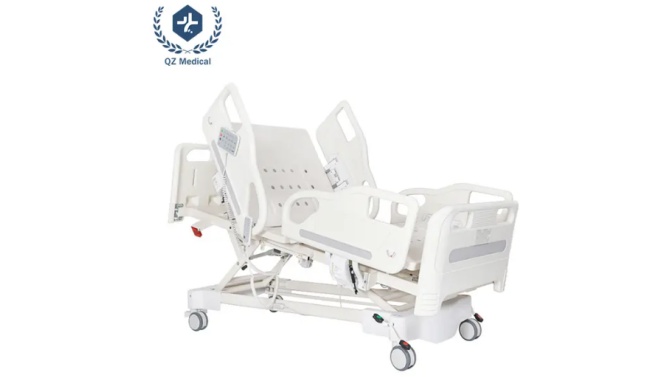
While side rails improve safety, they must be used correctly. Improper use can create risks such as entrapment or restricted movement.
Always ensure rails are securely locked when raised
Lower rails when assisting patients in or out of bed
Choose appropriate rail height for the patient
Monitor patients who may attempt to climb over rails
Safety Aspect | Recommendation |
Rail locking | Confirm secure positioning |
Patient monitoring | Especially for high-risk patients |
Proper adjustment | Match patient needs |
Regular inspection | Ensure no mechanical issues |
Modern hospital bed designs often include features that reduce entrapment risks and improve overall safety.
As medical technology advances, side rail design has improved significantly. Today’s hospital bed side rails are built with both functionality and patient comfort in mind.
High-strength materials such as aluminum or reinforced plastic
Smooth surfaces for easy cleaning and infection control
Ergonomic shapes to improve grip comfort
Integrated controls for bed adjustment
Lightweight construction for easy operation
These features help ensure that side rails meet both clinical and practical requirements.
Side rail usage can vary depending on the healthcare setting.
Setting | Side Rail Use |
Hospitals | Essential for safety and treatment |
Nursing homes | Support elderly patients |
Rehabilitation centers | Assist mobility training |
Home care | Provide safety for long-term patients |
Each environment has specific requirements, and the hospital bed design must adapt accordingly.
One of the key challenges in hospital bed design is balancing safety with patient comfort. While side rails provide protection, they should not make patients feel restricted.
Use adjustable rails for flexibility
Provide easy access for caregivers
Ensure smooth operation
Avoid overly rigid designs
A well-designed hospital bed integrates side rails in a way that enhances both safety and user experience.
Understanding why hospital beds have side rails reveals how important this feature is in modern healthcare environments. From preventing falls to supporting patient mobility and improving caregiver efficiency, side rails play a vital role in ensuring safe and effective patient care. In our experience, a well-designed hospital bed is not just about comfort—it is about creating a safe, supportive, and efficient care environment for both patients and medical staff. As healthcare needs continue to evolve, side rail design will also continue to improve, offering better functionality and higher safety standards.
For those looking to explore reliable hospital bed solutions and medical furniture options, Quzhi Industrial Co., Ltd. provides a range of products designed to meet different healthcare requirements. If you are evaluating equipment for hospitals, care facilities, or distribution, contacting their team can be a practical step to learn more about suitable solutions.
Hospital beds have side rails primarily to prevent patient falls, provide support for movement, and improve overall safety during treatment and recovery.
Not always. The use of side rails depends on the patient’s condition, mobility, and risk of falling. Healthcare providers assess each case individually.
Yes, side rails allow patients to grip and reposition themselves, making it easier to sit up, turn, or adjust their position without assistance.
Common types include full-length rails, half-length rails, split rails, and collapsible rails, each designed for different care needs and safety levels.


