
Views: 0 Author: Site Editor Publish Time: 2026-03-04 Origin: Site


For many families and healthcare providers, one of the most common questions is whether Medicare will supply a hospital bed when it becomes medically necessary. This question often arises during recovery from surgery, long-term illness, or when caring for elderly patients at home. While Medicare plays an important role in supporting medical needs, the process of obtaining a hospital bed through coverage is not always straightforward.
From our experience at Quzhi Industrial Co., Ltd., working with global partners in healthcare equipment, we have seen that customers are not only concerned about eligibility but also about timelines, product types, and whether the provided equipment truly meets patient needs. Understanding how Medicare works in this context can help users make better decisions and avoid delays in care.
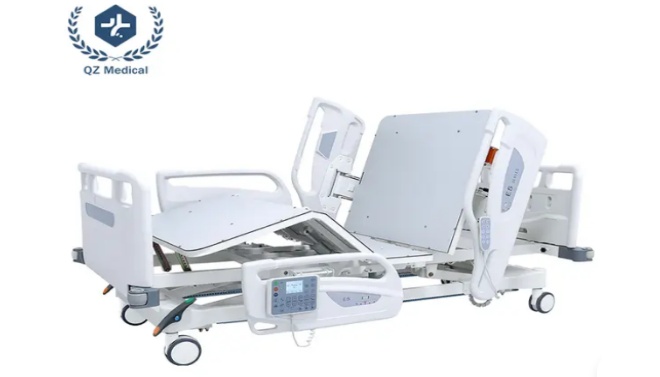
A hospital bed is a specialized medical device designed to improve patient comfort, safety, and care efficiency. Unlike standard beds, hospital beds offer adjustable height, backrest, and leg positioning, allowing caregivers to assist patients more easily and reducing physical strain.
Hospital beds are typically required for:
Patients with limited mobility
Individuals recovering from surgery
Elderly patients needing long-term care
Conditions requiring frequent repositioning
Situations where safety features like side rails are necessary
In both clinical and home environments, a hospital bed plays a key role in improving quality of care and supporting recovery.
Medicare can cover a hospital bed, but only under clearly defined conditions that focus on medical necessity and proper documentation. In most cases, hospital beds are classified as durable medical equipment (DME), which places them under Medicare Part B coverage. This category includes reusable medical devices that are required for home use and are prescribed to support treatment or recovery.
However, not every request for a hospital bed will be approved automatically. Medicare applies strict criteria to ensure that the equipment is essential rather than optional. To qualify for coverage, several requirements must be met. First, a licensed physician must evaluate the patient and provide a formal prescription stating that a hospital bed is medically necessary. This typically means the patient has a condition that requires specific positioning, frequent repositioning, or additional support that cannot be achieved with a standard bed.
Second, the patient must be receiving care at home rather than in a hospital or institutional setting. Medicare coverage for DME is specifically intended for home-based care situations. Third, the supplier providing the hospital bed must be enrolled in Medicare and meet all compliance standards. If a non-approved supplier is used, the claim may not be reimbursed.
Even when all conditions are met, Medicare does not usually cover the full cost. Instead, it typically covers a portion of the expense, leaving the patient responsible for the remaining balance. Understanding these conditions in advance can help avoid delays and ensure that the process moves smoothly.
Medicare coverage is not uniform across all types of hospital beds. The level of support provided depends on the patient’s medical condition and the specific features required for safe and effective care. In general, simpler bed types are more easily approved, while advanced models require stronger justification.
Basic hospital beds, including manual and semi-electric models, are the most commonly covered options. These beds provide essential functions such as raising and lowering the head or foot sections, which can help improve circulation, breathing, and comfort. Because they meet the needs of many patients without excessive cost, they are often the first choice under Medicare coverage.
Fully electric hospital beds offer more convenience, as all adjustments can be controlled electronically. Medicare may cover these beds if the patient cannot operate a manual or semi-electric model due to physical limitations. For example, patients with severe mobility restrictions or limited strength may require a fully electric system to reposition themselves safely.
Specialized hospital beds, such as those with air-fluidized surfaces or advanced pressure relief systems, are typically reserved for patients with more complex medical conditions. These beds are designed to prevent complications like pressure ulcers or to support patients with severe injuries. Because of their higher cost and specialized nature, Medicare approval for these beds usually requires detailed medical documentation and evidence that simpler options are insufficient.
Bed Type | Coverage Likelihood | Typical Use Case |
Manual Bed | High | Basic home care |
Semi-Electric Bed | High | Moderate mobility needs |
Fully Electric Bed | Conditional | Frequent repositioning required |
Specialized Bed | Limited | Severe medical conditions |
This comparison highlights an important point: while basic hospital beds are widely approved, more advanced models often require additional justification and may not always be covered.
In most cases, Medicare covers approximately 80% of the approved cost of a hospital bed after the patient has met their annual deductible. The remaining 20% is typically paid out of pocket, unless the patient has supplemental insurance that can help cover the balance. This cost-sharing structure is important to consider when planning for long-term care expenses.
Another key aspect of Medicare coverage is that the program often chooses to rent the hospital bed rather than purchase it outright. This means that payments are made on a monthly basis for a specified period. After a certain rental duration, ownership may transfer to the patient, depending on the type of equipment and the terms of coverage.
There are also limitations regarding what is included in the coverage. Medicare generally pays only for the basic equipment that meets medical necessity requirements. Additional accessories, such as specialized mattresses, upgraded side rails, or advanced positioning systems, may not be fully covered and could result in extra costs for the patient.
Several important points should be kept in mind:
Medicare may prioritize rental over purchase to manage costs
Only approved suppliers can provide reimbursable equipment
Optional upgrades and accessories may require out-of-pocket payment
Understanding these financial and procedural details allows patients and caregivers to make better-informed decisions. It also helps prevent unexpected expenses and ensures that the selected hospital bed meets both medical and practical needs.
The process of obtaining a hospital bed through Medicare involves several steps:
A physician must assess the patient’s condition and determine that a hospital bed is medically necessary.
The doctor provides a written order detailing the need for a hospital bed.
The patient must choose a Medicare-approved supplier to provide the equipment.
Once approved, the supplier delivers and installs the bed at the patient’s home.
While this process is structured, it can sometimes take time, especially if additional documentation is required.
Although Medicare provides valuable support, there are limitations that users should be aware of.
Patients may not have full control over the type or model of bed provided.
In many cases, Medicare covers rental rather than full purchase.
Documentation and approval processes can lead to delays in receiving equipment.
Out-of-pocket expenses may still apply, especially for upgraded features.
These limitations often lead users to explore alternative solutions, particularly when specific features or faster delivery are required.
When Medicare coverage is insufficient or delayed, patients and caregivers often consider other options.
Buying a hospital bed directly allows full control over features, design, and delivery time.
Some insurance plans may cover additional costs not included in Medicare.
Short-term rental options can provide flexibility during recovery periods.
At Quzhi Industrial Co., Ltd., we have observed that many customers choose direct sourcing solutions to ensure they receive a bed that fully meets their requirements without compromise.
Understanding whether Medicare will supply a hospital bed is only one part of the decision-making process. While Medicare can provide support under certain conditions, it may not always meet every requirement in terms of timing, features, or flexibility.
At Quzhi Industrial Co., Ltd., we focus on providing reliable and adaptable medical care beds that support a wide range of care scenarios, from home use to professional environments. By combining practical design with consistent quality, we aim to help customers find solutions that truly meet their needs.
If you are evaluating options or require further information, we welcome you to contact us to explore suitable hospital bed solutions for your specific situation.
1. Will Medicare always provide a hospital bed?
No, Medicare only provides a hospital bed if it is considered medically necessary and prescribed by a doctor.
2. Does Medicare cover the full cost of a hospital bed?
Typically, Medicare covers 80% of the approved cost, while the remaining 20% is paid by the patient.
3. Can I choose any hospital bed model under Medicare?
No, options may be limited to approved models that meet basic medical requirements.
4. What should I do if Medicare does not cover my hospital bed needs?
You can consider private purchase, rental options, or alternative suppliers to meet your requirements.


