
Views: 0 Author: Site Editor Publish Time: 2026-03-13 Origin: Site


Selecting the right bed for patient care is more important than many people initially realize. Whether the setting is a professional medical facility or a private home, the bed directly affects patient comfort, caregiver efficiency, and overall recovery outcomes. In recent years, the demand for both hospital beds and home care beds has grown significantly, driven by aging populations, increased home-based healthcare, and the need for flexible care solutions.
As a manufacturer with extensive experience in medical equipment, we at Quzhi Industrial Co., Ltd. have worked closely with healthcare providers, distributors, and home users worldwide. Through this experience, we have seen that many customers struggle to understand the real differences between a hospital bed and a home care bed. While they may look similar at first glance, their design priorities, functions, and applications can vary significantly. This article provides a clear and practical comparison to help you better understand which type of bed best suits your needs.
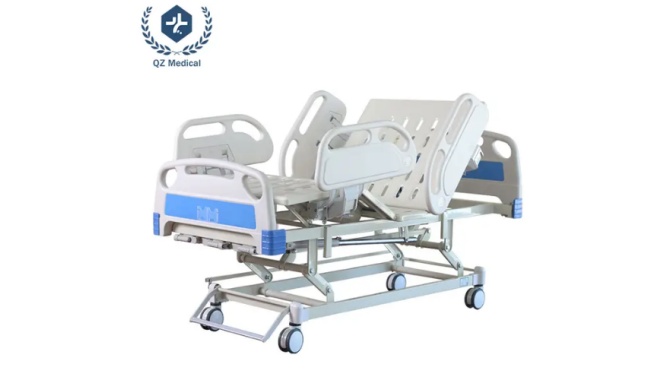
A hospital bed is a specialized medical device designed for use in clinical environments such as hospitals, clinics, and rehabilitation centers. These beds are engineered to meet strict medical standards and are equipped with advanced features that support both patients and healthcare professionals.
Hospital beds are typically adjustable, allowing caregivers to raise or lower the height, adjust the head and foot sections, and reposition the patient easily. This flexibility is essential for medical procedures, patient monitoring, and reducing the risk of complications such as pressure ulcers.
Key characteristics of a hospital bed include:
Electric or manual adjustment systems
Durable construction for continuous use
Compatibility with medical accessories
Enhanced safety features such as side rails
Easy mobility with lockable caster wheels
These beds are designed for intensive use and must support a wide range of medical conditions and patient needs.
A home care bed, while similar in function to a hospital bed, is specifically designed for use in residential environments. It provides many of the same adjustable features but focuses more on comfort, aesthetics, and ease of use in a home setting.
Home care beds are often used for elderly individuals, patients recovering from surgery, or those with chronic conditions who require long-term care at home. Compared to hospital beds, they tend to have a more user-friendly design and a less clinical appearance, making them more suitable for integration into a living space.
Typical features of a home care bed include:
Electric adjustment for comfort and positioning
Quieter operation for home environments
More compact and visually appealing design
Basic safety features such as side rails
Simplified controls for patients and caregivers
While they may not offer the full range of functions found in hospital beds, home care beds provide sufficient support for most non-critical care situations.
Understanding the difference between a hospital bed and a home care bed helps users choose a solution that fits both the patient’s condition and the care environment. Although the two bed types share some similar functions, they are designed for different purposes. A hospital bed is mainly used in hospitals, clinics, rehabilitation centers, and nursing facilities, where patients may need frequent monitoring, intensive repositioning, and advanced medical support. A home care bed is intended for residential use, with greater emphasis on comfort, simpler operation, and a design that feels less clinical.
Hospital beds usually provide more advanced and multi-functional systems, including precise positioning, compatibility with medical devices, and stronger safety features. They are also built for continuous heavy-duty use, which makes them more durable but usually more expensive. In contrast, home care beds offer basic to moderate functions such as backrest and leg elevation, height adjustment, and easy remote control operation. They are often more affordable and easier for family members or non-professional caregivers to use.
Functionality also affects patient care. Hospital beds may include Trendelenburg positioning, monitoring compatibility, emergency controls, and advanced locking systems. Home care beds focus more on practical comfort, quiet motors, simple maintenance, and everyday safety.
Feature | Hospital Bed | Home Care Bed |
Primary Use | Hospitals and medical facilities | Home environments |
Functionality | Advanced and multi-functional | Basic to moderate |
Adjustability | High precision | Standard daily adjustment |
Design | Clinical and practical | More home-friendly |
Durability | Heavy-duty continuous use | Long-term residential use |
Cost | Higher | More affordable |
Ease of Use | Often requires trained caregivers | User-friendly |
Safety Features | Advanced alarms and locking systems | Basic rails and stable frame support |
In short, hospital beds are better suited to complex medical care, while home care beds are ideal for daily support in a residential setting.
Choosing the right bed based on patient needs requires more than simply comparing product features. It involves understanding the patient’s physical condition, the expected length of care, the level of assistance required, and the setting in which the bed will be used. A bed that works well in a hospital may not always be the most practical option for a private home, while a bed designed for home care may not provide enough support for patients with more complex medical needs.
A hospital bed is generally the better choice for patients who need intensive medical care, frequent repositioning by healthcare staff, or support from advanced monitoring and treatment equipment. These beds are especially useful for patients with limited mobility, serious illness, post-operative complications, or conditions that require close observation. In hospitals, rehabilitation centers, and professional nursing facilities, hospital beds provide precise adjustment, stronger safety systems, and the durability needed for continuous use.
A home care bed is more suitable for long-term care in a residential setting. It is often the preferred option for elderly patients, people recovering after surgery, or individuals living with chronic but stable conditions. In these situations, comfort, easier daily operation, and a more home-friendly design become very important. Home care beds allow patients to rest more comfortably while also helping family members or caregivers manage routine support with less physical strain.
Other factors should also be considered, such as room size, caregiver skill level, budget, and how often the bed will be adjusted during the day. By evaluating all of these points carefully, users can choose a bed that offers the right balance of comfort, safety, practicality, and cost for the patient’s specific situation.
Budget is often a key factor in decision-making. Hospital beds generally involve higher upfront costs due to their advanced features and heavy-duty construction. However, they offer long-term value in medical environments where durability and performance are critical.
Home care beds, on the other hand, are more affordable and cost-effective for residential use. They provide essential functions without unnecessary complexity, making them a practical choice for many families.
From our experience at Quzhi Industrial Co., Ltd., customers often benefit from evaluating not only the initial cost but also long-term usage, maintenance, and adaptability.
The design of patient beds continues to evolve with advancements in technology and changing healthcare needs.
Modern beds are increasingly equipped with smart controls, remote monitoring, and automated positioning systems.
Better design improves comfort for patients and reduces strain on caregivers.
Even hospital-grade beds are now being designed with aesthetics in mind to better suit home environments.
These allow easier transportation, installation, and customization.
These trends are shaping the future of both hospital beds and home care beds, making them more versatile and user-friendly.
Understanding the differences between a hospital bed and a home care bed is essential for making informed decisions in patient care. Each type of bed serves a specific purpose, and choosing the right one can significantly improve comfort, safety, and overall care efficiency.
At Quzhi Industrial Co., Ltd., we are committed to providing reliable and well-designed medical care beds that meet the needs of both professional healthcare environments and home users. By combining practical functionality with thoughtful design, we aim to support better care experiences for patients and caregivers alike.
If you are exploring options or need further guidance, we welcome you to contact us to learn more about our solutions and how they can support your specific requirements.
1. What is the main difference between a hospital bed and a home care bed?
A hospital bed offers advanced medical functions for clinical use, while a home care bed focuses on comfort and basic adjustments for residential care.
2. Can a hospital bed be used at home?
Yes, but it may be more complex and expensive than necessary for typical home care situations.
3. Are home care beds safe for elderly patients?
Yes, they are designed with safety features such as side rails and adjustable heights to support elderly care.
4. How do I choose the right hospital bed for my needs?
Consider the patient’s condition, required features, care environment, and budget to determine the most suitable option.


