
Views: 0 Author: Site Editor Publish Time: 2026-03-10 Origin: Site


Selecting the right hospital bed is not simply about features on a specification sheet—it is about how well the bed supports patient comfort, caregiver efficiency, and long-term reliability in real healthcare environments. From our experience working closely with hospitals, clinics, and care facilities, we have seen that a well-designed 5 function electric hospital bed can significantly improve both patient outcomes and daily operations. However, choosing the right one requires understanding how each function contributes to real use scenarios, not just technical descriptions.
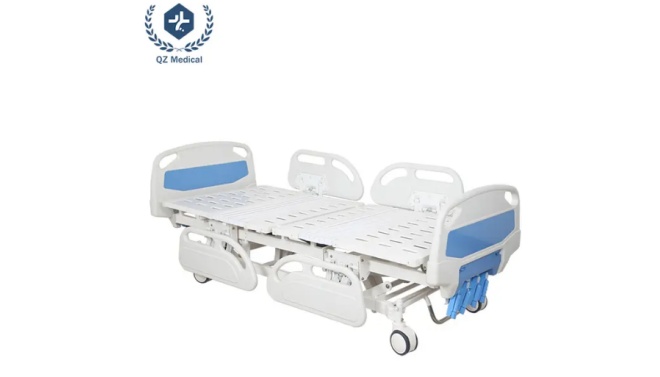
A 5 function electric hospital bed is designed to provide multiple adjustable positions through motorized control. These beds are commonly used in hospitals, rehabilitation centers, and long-term care facilities where flexibility and patient comfort are essential.
The five primary functions typically include:
Backrest adjustment
Leg rest adjustment
Height adjustment
Trendelenburg position
Reverse Trendelenburg position
Each function serves a specific purpose, allowing caregivers to adapt the bed to different medical needs while ensuring patient safety.
Patient positioning plays a key role in recovery. Adjusting the backrest helps with breathing and feeding, while leg elevation improves circulation. A 5 function electric hospital bed allows smooth transitions between positions, reducing discomfort and supporting better outcomes.
Manual adjustments can be physically demanding and time-consuming. Electric controls simplify operation, allowing caregivers to reposition patients quickly and safely. This reduces strain and improves efficiency in daily care routines.
Different patients require different care approaches. A bed that can adapt to multiple positions ensures that healthcare providers can respond to changing conditions without needing additional equipment.
The backrest function allows the upper body to be raised to various angles, which is one of the most frequently used adjustments in a hospital bed. This function is essential for patients who need to sit up for eating, drinking, or communicating with caregivers and family members. It also plays a critical role in respiratory support, especially for patients with breathing difficulties, as an elevated upper body position can help reduce pressure on the lungs.
In addition, proper backrest positioning can help prevent complications such as aspiration or discomfort caused by prolonged lying. For long-term patients, this function significantly improves daily comfort and reduces dependency on manual repositioning.
Leg elevation is another important function that contributes directly to patient comfort and medical outcomes. By raising the legs, blood circulation can be improved, which helps reduce swelling, especially in patients with limited mobility or post-surgical conditions.
This function is also beneficial for relieving pressure on the lower back and improving overall posture. For patients who remain in bed for extended periods, proper leg positioning can reduce fatigue and lower the risk of complications such as deep vein thrombosis. In real care environments, this adjustment supports both comfort and preventive healthcare.
Height adjustment is not only about convenience but also about safety for both patients and caregivers. By raising or lowering the bed, caregivers can work at an ergonomic height, reducing the risk of back strain or injury during routine care tasks such as transferring, cleaning, or repositioning patients.
For patients, adjustable height makes it easier and safer to get in and out of bed. Lowering the bed reduces fall risk, while raising it facilitates medical procedures. This flexibility is especially important in environments where patients have different mobility levels and require varying levels of assistance.
The Trendelenburg position tilts the bed so that the patient’s head is lower than their feet. This function is commonly used in emergency or clinical situations where blood flow needs to be redistributed quickly.
It can assist in certain medical procedures, improve circulation to vital organs in specific cases, and support patient positioning during treatment. Although it may not be used as frequently as other functions, it is essential in situations where rapid response is required.
The reverse Trendelenburg position tilts the bed in the opposite direction, raising the head above the feet. This function is particularly useful for patients with respiratory conditions, as it helps improve breathing by reducing pressure on the chest.
It is also used in cases where elevated head positioning is required for comfort or treatment. This function adds versatility to the bed, allowing it to adapt to a wider range of medical needs and patient conditions.
The motor system is the core of an electric hospital bed and directly affects its performance. A high-quality motor ensures smooth, stable, and quiet operation, which is important for maintaining a comfortable environment for patients.
Frequent adjustments should not cause noise or vibration that could disturb rest. In addition, reliable motors reduce the likelihood of breakdowns, ensuring that the bed remains functional over long periods of use. Consistency in movement also improves safety during patient repositioning.
The structural integrity of the bed frame determines its durability and load capacity. A strong frame must support the patient’s weight safely while remaining stable during adjustments.
High-quality materials, such as reinforced steel, provide better resistance to wear and deformation. Stability is especially important when the bed is adjusted frequently, as any instability could compromise safety. A well-built frame ensures long-term reliability and reduces maintenance needs.
Ease of use is a key factor in daily operations. A well-designed control system allows caregivers to operate the bed quickly and accurately without confusion.
Intuitive controls reduce training time and minimize the risk of errors. In busy healthcare environments, simple and responsive control systems improve efficiency and allow caregivers to focus more on patient care rather than equipment operation.
Safety features are essential for protecting both patients and caregivers. Side rails help prevent falls, while locking mechanisms keep the bed stable during use.
Emergency controls provide additional security, allowing quick adjustments when needed. These features are particularly important for patients with limited mobility or those at risk of falling. A well-designed safety system ensures peace of mind and reduces potential risks.
Choosing a hospital bed should always be based on actual usage scenarios rather than theoretical specifications. Some features may appear important but are rarely used, while others play a critical role in daily operations. Understanding how each feature contributes to real-world use helps buyers make better decisions.
Feature | Why It Matters | Practical Benefit |
Electric adjustment | Enables smooth positioning | Reduces caregiver workload |
Height control | Improves accessibility | Enhances patient safety |
Durable frame | Ensures structural stability | Lowers maintenance costs |
Quiet motor | Minimizes noise disturbance | Improves patient comfort |
Safety rails | Prevents accidental falls | Increases protection |
Prioritizing these features ensures that the bed meets both operational and patient care needs. It is not about having more functions, but about having the right functions that deliver real value.
In hospitals, beds must support a wide range of medical procedures while maintaining efficiency. Quick adjustments and reliable performance are essential for handling different patient conditions.
Rehabilitation patients often require frequent repositioning to support recovery and mobility training. A 5 function electric hospital bed allows smooth transitions between positions, making therapy more effective.
Durability becomes a key factor in long-term care environments. Beds must operate consistently over extended periods while remaining easy to use for caregivers.
In home care, simplicity and safety are the main priorities. Electric hospital beds provide convenience for caregivers and improve comfort for patients, enhancing overall quality of life.
Choosing the right hospital bed is a decision that affects patient comfort, caregiver efficiency, and overall care quality. A 5 function electric hospital bed offers the flexibility needed to handle different medical situations while ensuring safety and reliability. At Quzhi Industrial Co., Ltd., we are committed to providing solutions that align with real healthcare demands, helping facilities improve both performance and patient experience. If you are exploring options for a reliable medical electric bed, we welcome you to contact us to learn more about how our products can support your needs.
1. What is a 5 function electric hospital bed used for?
It is used to provide adjustable positioning for patients, improving comfort, safety, and medical care efficiency.
2. Why is an electric hospital bed better than a manual one?
Electric beds allow easier adjustments, reducing physical effort for caregivers and improving patient comfort.
3. What should I consider when buying a hospital bed?
Key factors include functionality, durability, safety features, and ease of use.
4. Are 5 function hospital beds suitable for home care?
Yes, they are widely used in home care because they offer flexibility and convenience for both patients and caregivers.


