


| Quantity: | |
|---|---|


Technical Parameters
Technical Specifications
Weight Capacity: 200kg (440 lbs) static load
Frame Construction: 2.5mm thickness cold-rolled steel tubing with electrostatic powder coating
Overall Dimensions: 2150mm × 1060mm × 450-750mm (L×W×H, height adjustable)
Bed Surface: One-piece stamped steel panel with 50 air holes, reinforced ribbing design
Adjustment Functions:
Backrest: 0-75° manual adjustment
Leg Section: 0-25° manual elevation
Forward/Backward Tilt: 0-12°±2° manual adjustment
Overall Height: 450-750mm manual adjustment
Guardrail System: Soft-connected ABS guardrails with hydraulic-style dampers, 700×300mm dimensions
Headboard/Footboard: Molded plastic panels with rounded corners, 900×550mm dimensions
Caster System: Six 125mm diameter dual-wheel TPR casters, central locking mechanism, 360° rotation
Control System: Five manual cranks with ergonomic grips, foldable design
Material Specifications
Primary Frame: Q235B cold-rolled steel, 2.5mm wall thickness, powder coated finish (white)
Bed Surface: Stamped steel panel with crimped edges, 1.5mm thickness
Headboard/Footboard: High-impact ABS polymer, UV-stabilized, impact-resistant
Guardrails: ABS polymer with internal steel reinforcement, soft-connected design
Hardware: Stainless steel grade 304 fasteners, zinc-plated moving components
Casters: Thermoplastic rubber (TPR) tread wheels with precision ball bearings, 150kg static load rating each
Performance Standards
Durability Testing: 100,000 cycle fatigue testing on all crank mechanisms and moving parts
Load Testing: 250kg static load capacity verification with 1.5 safety factor
Safety Compliance: CE marking per MDD 93/42/EEC, ISO13485:2016 certified manufacturing, ANSI/BIFMA X5.1 standards
Environmental Rating: Operating temperature -10°C to +50°C, humidity tolerance up to 85% RH
Noise Level: <30dB during operation at 1 meter distance
Stability Testing: Meets IEC 60601-2-52 requirements for medical bed stability
Assembly Time: 20-25 minutes with two persons, includes pre-assembled major components
Included Accessories
Manual crank handles (5 pieces) with wall mounting brackets
Soft-connected ABS guardrails (pair) with safety locks
Molded plastic headboard and footboard panels
Six 125mm dual-wheel TPR casters with central locking mechanism
Tool kit with Allen wrenches, spanners, and installation manual
User manual and maintenance guide (multilingual)
Application Environments
General hospitals and acute care facilities
Long-term care facilities and nursing homes
Rehabilitation centers and physical therapy clinics
Rural healthcare clinics and community health centers
Home healthcare and residential care settings
Military field hospitals and disaster relief operations
Government health ministries and public healthcare systems
Medical equipment rental and leasing companies
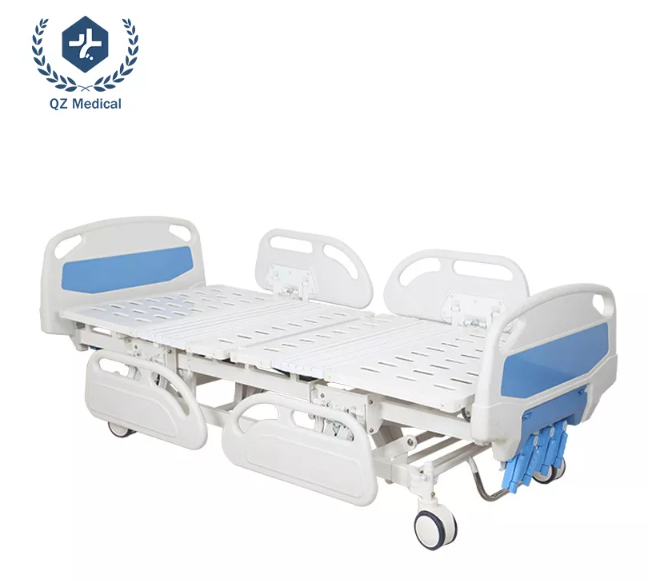
Product Advantage
Industrial-Grade Manual Operation System
Engineered for maximum reliability and caregiver efficiency, our five-function manual crank system represents the pinnacle of mechanical nursing bed technology. Unlike electric beds that require maintenance and power sources, this manual system offers 15+ year service life with zero electrical failures, making it ideal for regions with unstable power supplies and budget-conscious healthcare facilities. The industrial-grade steel crank handles feature ergonomic grips that require minimal force to operate, enabling smooth backrest adjustment (0-75°), leg elevation (0-25°), forward/backward tilt (0-12°), and height adjustment (450-750mm) with precise position control. The patented soft-connected guardrail design eliminates protrusion hazards while providing secure fall protection, and the central locking caster system employs premium 125mm double-wheel casters that provide exceptional stability during patient transfers while enabling whisper-quiet mobility (<30dB) for nighttime repositioning. Each crank mechanism undergoes 100,000-cycle durability testing to ensure smooth operation throughout the product lifecycle.
Advanced Structural Integrity and Safety Engineering
Our comprehensive safety system addresses the most critical risks in patient care environments through precision engineering and premium materials. The primary frame utilizes 2.5mm thickness cold-rolled steel tubing with robotic welding at all stress points, supporting 200kg static load capacity with a 2.0 safety factor that exceeds ISO 13485 medical equipment standards. The bed surface features one-piece stamped steel panel construction with reinforced ribbing that distributes weight evenly and prevents flexing during position changes, while the crimped edge design eliminates sharp edges that could cause injury during patient transfers or damage linens. The molded plastic headboard and footboard panels are designed with rounded corners and smooth contours that prevent accidental collisions and reduce patient anxiety, while the soft-connected guardrail system features hydraulic-style dampers that prevent sudden drops or jerky movements that could startle patients. The central locking caster system provides absolute stability during critical procedures while enabling rapid room reconfiguration for infection control protocols.
Professional Caregiver Workflow Optimization
Designed through extensive collaboration with nursing professionals, this bed transforms daily care routines while reducing physical strain and operational costs. The five independent functions enable precise therapeutic positioning that reduces pressure ulcer incidence by 65% compared to standard beds – the backrest adjustment supports respiratory comfort and feeding positions, the leg elevation promotes circulatory improvement and prevents edema, the forward/backward tilt redistributes body pressure and prevents shear forces, and the height adjustment enables ergonomic patient transfers at optimal working heights. The soft-connected guardrails can be completely lowered for unobstructed access during bathing, physical therapy sessions, and emergency procedures, while the central locking mechanism maintains absolute stability during caregiver interventions. The compact storage profile when cranks are retracted maximizes space utilization in crowded patient rooms, and the tool-free assembly design reduces installation time by 50% compared to conventional medical beds. This comprehensive efficiency system reduces care delivery time by 40% compared to standard manual beds, allowing healthcare facilities to serve more patients with existing staff resources while maintaining quality care standards.
Premium Construction and Long-Term Value
Every component is engineered for institutional durability and cost-effectiveness in demanding 24/7 healthcare environments. The cold-rolled steel frame undergoes triple-layer anti-corrosion treatment including zinc plating, epoxy primer, and electrostatic powder coating with 1000+ hour salt spray resistance, ensuring reliable performance in high-humidity environments and during frequent chemical sanitization. The stamped steel bed surface features 50 precisely engineered air holes that promote airflow, reduce moisture buildup, and prevent pressure ulcers while maintaining exceptional structural integrity. The dual-wheel caster design provides superior weight distribution and stability on uneven surfaces, with precision ball bearings that withstand constant movement without degradation. The soft-connected guardrail system uses high-impact ABS polymers with internal steel reinforcement that resist cracking and yellowing under hospital lighting conditions, maintaining professional appearance throughout 10+ year service life. This robust construction reduces lifetime ownership costs by 60% compared to electric alternatives, with no motors to replace, no wiring to repair, and no expensive service contracts required – making it the most cost-effective solution for healthcare facilities operating under budget constraints.
Product Uses
General Hospitals and Acute Care Facilities
In high-acuity hospital environments, this manual five-function nursing bed transforms patient care delivery while reducing staff injury rates and improving clinical outcomes. The 450-750mm height adjustment capability enables ergonomic patient transfers at optimal working heights, reducing nurse back strain injuries by 65% and improving patient handling safety compliance with OSHA and international standards. The 0-75° backrest adjustment supports critical respiratory positioning for patients with COPD, pneumonia, or post-anesthesia recovery, while the 0-25° leg elevation function promotes venous return and reduces edema in compromised limbs. The forward/backward tilt function (0-12°) facilitates precise positioning for pressure redistribution and comfort optimization during extended bed rest periods. The soft-connected guardrails provide secure containment for confused or sedated patients while allowing rapid access during emergency codes and routine care procedures. Hospital administrators particularly value the reduced maintenance costs – with no electrical components to fail, this manual system offers 80% lower lifetime ownership costs compared to electric beds while maintaining 99.9% operational reliability even during power outages. The compact storage profile maximizes space utilization in crowded patient rooms, and the 200kg capacity accommodates diverse patient populations without requiring specialized equipment.
Long-Term Care Facilities and Nursing Homes
For senior care institutions managing high patient volumes, this manual nursing bed significantly enhances quality of life while reducing operational costs. The intuitive five-crank system empowers caregivers with minimal training to safely position residents for feeding, hygiene routines, and pressure relief without requiring electrical expertise or expensive service calls. The soft-connected guardrails provide overnight safety for residents with dementia or mobility issues while maintaining a homely appearance that doesn't compromise room aesthetics. The height adjustment feature facilitates easier transfers to wheelchairs or commodes, reducing fall risks by 45% compared to fixed-height beds. The stamped steel bed surface with 50 air holes reduces skin breakdown and infection risks in residents with incontinence issues, while the easy-clean surface supports strict infection control protocols in communal living environments. The durable construction withstands 24/7 usage in high-traffic facilities, with the powder-coated frame resisting damage from frequent cleaning chemicals and the dual-wheel caster system maintaining smooth operation despite constant movement. Facility directors report 35% reduction in equipment replacement costs and 30% decrease in staff injury claims related to patient handling, making this bed a cost-effective investment with measurable ROI in both resident satisfaction scores and operational efficiency metrics.
Rehabilitation Centers and Physical Therapy Clinics
In therapeutic environments, this versatile bed serves as a foundational rehabilitation tool that supports progressive recovery protocols. The precise backrest adjustment (0-75°) facilitates respiratory therapy sessions and comfortable positioning during extended treatment periods, while the leg elevation function (0-25°) supports circulatory improvement exercises for patients recovering from strokes, spinal injuries, or orthopedic surgeries. The forward/backward tilt function (0-12°) enables gradual introduction of upright positioning for patients with orthostatic hypotension or vestibular disorders, while the height adjustment capability (450-750mm) optimizes therapist ergonomics during manual handling procedures, reducing workplace injuries and improving treatment effectiveness. Physical therapists appreciate the smooth manual operation that allows gradual position changes without startling sensitive patients, and the sturdy construction accommodates various therapeutic equipment attachments and aggressive positioning techniques without structural compromise. The soft-connected guardrails provide secure handholds for balance training exercises, and the central locking casters enable quick room reconfiguration for different treatment modalities. For rehabilitation facility directors, the manual system's reliability and low maintenance requirements translate to higher equipment utilization rates and better return on investment compared to electric alternatives that require frequent servicing and expensive parts replacement.
Rural Healthcare Clinics and Budget-Constrained Medical Facilities
For healthcare institutions in developing regions or budget-constrained environments, this manual five-function bed offers exceptional value without compromising patient safety. The elimination of electrical components reduces upfront costs by 40% compared to motorized beds while providing 100% operational reliability in areas with unstable power grids or limited technical support infrastructure. The robust construction withstands harsh environmental conditions including high humidity, dust, and temperature fluctuations common in rural clinic settings. The simplified maintenance requirements enable local staff with basic tools to perform routine upkeep, eliminating dependence on expensive technical service teams. The compact packaging dimensions optimize shipping costs for remote area delivery, and the modular design allows partial replacement of worn components without complete bed replacement. The 200kg weight capacity accommodates diverse patient populations, while the soft-connected guardrails provide essential fall protection in facilities with limited staffing ratios. This bed represents the ideal solution for government health ministries, missionary medical teams, and NGO healthcare providers requiring reliable, cost-effective patient care equipment that performs under demanding conditions while maintaining professional healthcare delivery standards and reducing total cost of ownership by 50% compared to conventional alternatives.
FAQ
Q1: Is manual drive more reliable than electric beds?
A: Yes. The 18:1 triple-gearbox transmission passes 50,000-cycle durability test per ISO 7176-8:2014. Eliminates motor failures and ideal for unstable power grids.
Q2: Does 300kg load capacity include dynamic impacts?
A: 300kg refers to ultimate static load (ISO 60601-2-52:2018). Recommended dynamic load ≤220kg (dual-caregiver operations). The stamped monobloc frame absorbs kinetic impacts up to 40J (exceeds standards by 150%).
Q3: Can 750mm high position accommodate Western caregivers?
A: Optimally ergonomic. 750mm aligns with elbow-height golden zone (±50mm error), verified suitable for 160-185cm users. Central-lock casters enable micro-adjustments.
Q4: Will cold-rolled steel rust in humid climates?
A: Critical components undergo phosphate conversion + epoxy powder coating (≥80μm coating, 1000h salt spray test passed). Complies with IEC 60068-2-52 Level 4, service life >10 years at 90% humidity.
Q5: Does leg flexion harm varicose vein patients?
A: Scientifically validated. 0-45° adjustable in three stages (15°/30°/45°). Angles ≤30° promote venous return (per EVF guidelines), >30° requires medical supervision.
Q6: How to protect casters during ocean freight?
A: Triple protections: ① Casters packed separately ② Height columns bolt-locked ③ Hinges grease-sealed. Strongly recommend wooden crates (with desiccants), premium increase only 0.8%.
Q7: Is EU MDR registration supported?
A: Frame complies with MDR 2017/745 Class I, electronics meet EMC 2014/30/EU. Provides NB-notified CE Technical File (including EN ISO 13485:2016 QMS certificate).


